



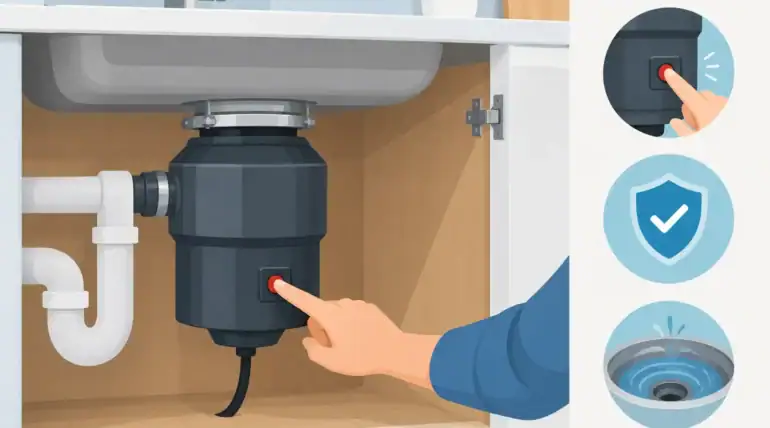
The dinner cleanup is nearly finished, then the disposal goes quiet or gives off a low hum. When you need to reset a tripped garbage disposal, the fix may be simple, but safety comes first. A disposal can trip its built-in overload protector after a jam, overheating, or a power interruption. Resetting it correctly can get your sink working again without turning a minor problem into a damaged appliance.
Before touching the unit, turn the disposal switch off. If your disposal is connected with a plug under the sink, unplug it. If it is hardwired, switch off the correct circuit breaker. Never put your hand into the disposal, even when the power is off.
Why a Garbage Disposal Trips
A garbage disposal has an internal overload protector, often called a reset button. It is designed to shut the motor down when it gets too hot or cannot turn freely. This protects the motor from overheating, but it does not remove the cause of the problem.
The most common reason is a jam. Small bones, fruit pits, utensils, dense vegetable scraps, and other hard items can stop the grinding plate. Fibrous foods such as celery, corn husks, onion skins, and potato peels can also wrap around internal parts or create a thick blockage in the drain.
A disposal may also trip after being run for too long, especially if it is older or has a weak motor. In some cases, the disposal itself is fine and the issue is electrical. A tripped kitchen circuit breaker, a loose connection, or a failed wall switch can all prevent the unit from running.
How to Reset a Tripped Garbage Disposal
Start by giving the disposal time to cool. Wait about 10 to 15 minutes after it shuts down, particularly if you noticed a hot or burning smell. Do not repeatedly flip the wall switch in an attempt to restart it. That can place more strain on the motor if something is still jammed.
Look beneath the sink for the reset button. On most models, it is a small red button located on the bottom of the disposal. Press it firmly once. If it will not stay in, wait a few more minutes for the motor to cool and try again.
Once the reset button is engaged, restore power. Run cool water into the sink, then turn the disposal on briefly. If it runs normally, let cold water continue for 20 to 30 seconds to help flush away remaining food particles.
If the disposal only hums, shuts off again, or does nothing after you press reset, turn the power back off. The unit may still be jammed or may have an electrical or mechanical failure that needs repair.
Check for a Jam Without Reaching Inside
With the disposal disconnected from power, use a flashlight to look down through the sink opening. Do not use your fingers to feel around inside. If you can clearly see an item such as a spoon, bottle cap, or piece of food debris, remove it with long-handled tongs or pliers.
Many disposals also have a manual turning socket on the bottom of the unit. A disposal wrench, or in some models a 1/4-inch Allen wrench, can be inserted into this socket and moved back and forth to free the grinding mechanism. Follow the manufacturer instructions for your specific model. If the wrench will not move easily, do not force it. Excessive force can damage internal components.
After clearing the obstruction, press the reset button again if needed, restore power, run cold water, and test the disposal. A smooth, steady sound is a good sign. Grinding, rattling, or a continuing hum means the problem is not fully resolved.
What Not to Put Down the Disposal
A garbage disposal is built for small amounts of soft food residue, not for handling every item left after meal prep. Keeping the wrong materials out of the unit prevents many reset and jam problems.
Avoid sending grease, cooking oil, coffee grounds, pasta, rice, large amounts of eggshells, bones, fruit pits, and fibrous vegetables through the disposal. Grease may pass through while warm, but it can solidify farther down the drain and cause a clog. Pasta and rice expand with water, while stringy food scraps can tangle around moving parts.
It also helps to run cold water before, during, and after using the disposal. Cold water helps keep fats more solid so they can move through the system rather than coat the drain line. Feed food scraps in gradually instead of packing the disposal full at once.
When Resetting the Disposal Is Not Enough
A reset button is useful, but it is not a permanent solution for repeated shutdowns. If your disposal trips every few days or every time you use it, there is likely an underlying issue. Continuing to reset it may eventually lead to a burned-out motor or a more expensive plumbing problem.
Call for professional disposal repair when you notice any of these signs:
- The disposal hums but will not turn after you clear visible debris.
- It trips the reset button repeatedly or trips the kitchen breaker.
- Water leaks from the bottom of the disposal housing.
- You smell burning, see smoke, or notice the unit becomes unusually hot.
- The disposal makes loud metal-on-metal grinding sounds.
- The sink drains slowly even when the disposal appears to run normally.
Leaks from the bottom of the unit often point to a failed internal seal. In that situation, tightening a connection under the sink will not solve the issue. Similarly, a disposal that is silent after power and reset checks may have a failed switch, wiring issue, or worn motor.
A Few Safe Checks Before Scheduling Service
If the reset button does not restore operation, confirm the basics before assuming the disposal needs replacement. Check whether the kitchen circuit breaker has tripped. If the disposal is plugged into an outlet beneath the sink, make sure the plug is secure. Some kitchens also use a nearby GFCI outlet with a test and reset button, which can cut power to other outlets on the same circuit.
If you find a tripped breaker or GFCI outlet, reset it once. If it trips again when the disposal runs, stop using the unit. Repeated electrical trips are not something to ignore, especially in a damp area beneath the sink.
Do not use chemical drain cleaners in a garbage disposal. They can damage seals and metal components, and they create a safety risk for anyone working on the sink later. If the problem involves both a jammed disposal and a clogged drain, a technician can identify whether the obstruction is inside the unit, in the trap, or farther down the line.
Fast Help for a Disposal That Keeps Tripping
A disposal that will not reset can interrupt a busy kitchen quickly, especially when water is backing up in the sink. Smart Appliance Repair provides straightforward garbage disposal diagnosis and repair for homeowners who need clear answers, upfront pricing, and dependable service. A trained technician can check the motor, grinding components, drain connections, switch, and power supply to determine whether repair makes sense or replacement is the better value.
For homeowners in Cincinnati and nearby communities, prompt service can help prevent a minor disposal issue from becoming a sink backup or water-damage concern. If you have safely tried the reset button and the disposal still will not run, leave it off, keep the sink clear, and arrange professional help before the next meal cleanup becomes a bigger problem.