



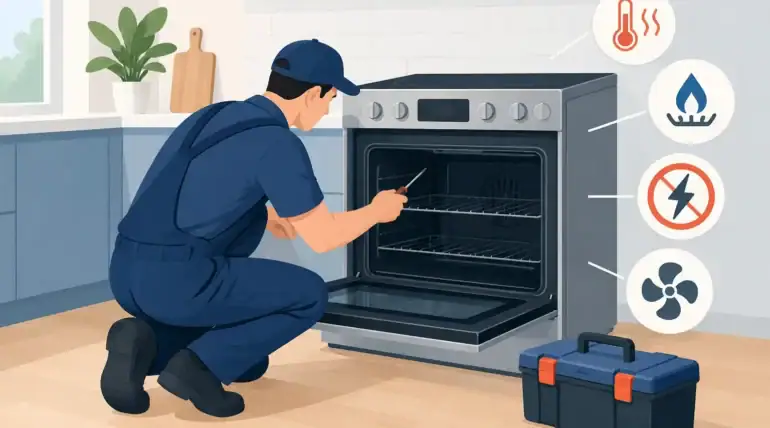
A failed oven changes more than dinner plans. For a busy household, it can mean wasted groceries, takeout costs, and a kitchen routine that suddenly stops working. For a restaurant or other business, it can mean lost sales and frustrated customers. Fast oven repair helps restore dependable cooking before a small issue turns into a larger interruption.
Some oven problems have simple causes, such as a tripped breaker or an incorrect setting. Others involve high-voltage electrical components, gas connections, heating elements, or electronic controls that require a trained technician. Knowing the difference can save time, prevent unnecessary replacement, and keep your home or workplace safe.
Common Signs You Need Oven Repair
Ovens rarely stop working without giving some warning. You may notice that food takes much longer to cook, cookies brown unevenly, or the oven never reaches the temperature shown on the display. These are not just inconveniences. They can point to a failing heating element, temperature sensor, igniter, thermostat, control board, or door seal.
An oven that will not turn on is another clear reason to schedule service. With an electric model, the cause may be a damaged element, blown thermal fuse, wiring issue, or failed control. With a gas oven, a weak or failed igniter is often the culprit. If you smell gas, hear hissing near the appliance, or suspect a gas leak, do not try to troubleshoot it yourself. Leave the area, avoid switches and open flames, and contact the appropriate emergency utility service.
Other symptoms that deserve attention include a door that will not close properly, a cracked glass panel, error codes on the display, sparks, burning smells, or a self-clean cycle that will not complete. A door issue can allow heat to escape and force the oven to work harder. Electrical smells or visible sparking should be treated as urgent, even if the oven still appears to operate.
When Uneven Heating Is More Than a Cooking Problem
Uneven cooking is one of the most common reasons people call for oven repair. A casserole may be hot on one side and cold on the other. Cakes may sink or brown too quickly around the edges. Meat may appear done outside while remaining undercooked in the center.
Before assuming a major repair is needed, check a few basics. Make sure racks are positioned correctly and that large pans are not blocking airflow. Avoid placing foil over oven vents or lining the bottom of the oven unless the manufacturer specifically allows it. Use an oven thermometer to compare the actual temperature with the selected setting after the oven has fully preheated.
If the temperature is consistently off by a small amount, some models allow calibration through the control settings. However, large temperature swings, repeated underheating, or heat that cuts out during cooking usually need professional diagnosis. The correct repair depends on the model and the failed part. Replacing components without testing can lead to unnecessary expense and may not solve the real problem.
Electric Oven Heating Problems
Electric ovens usually rely on bake and broil elements to create heat. A damaged element may show blistering, cracks, burn marks, or areas that do not glow evenly. It may also fail without obvious visible damage.
Do not touch or attempt to remove an element until power has been disconnected at the breaker. Even then, the issue may be related to wiring or the electronic control rather than the element itself. A technician can test the element and related circuits, identify the source of the failure, and install the correct replacement if needed.
Gas Oven Ignition Problems
Gas ovens commonly use a glow-bar igniter or electronic ignition system. If the oven takes a long time to light, clicks repeatedly, fails to heat, or produces an unusual gas odor, service should not wait. A weak igniter can draw enough power to glow but still fail to open the gas valve correctly.
Gas appliance repair requires careful testing and proper handling of fuel connections. A trained technician can confirm whether the issue is the igniter, valve, sensor, wiring, or control system while checking that the appliance operates safely after repair.
Safe Checks to Make Before You Schedule Service
A few quick checks can rule out common, non-repair causes. First, verify that the range is receiving power. Check the household breaker, especially after a storm or power interruption. If the oven display is blank but the cooktop works, the appliance may still have a component failure, but a breaker check is a sensible first step.
Next, confirm that the clock is set if your model requires it and that a delayed-start, timer, or Sabbath setting has not been activated. Review the display for an error code and write it down. That information helps a technician begin diagnosis more efficiently.
For poor heating, remove heavy buildup around the door seal and look for food debris that prevents the door from closing. Let the appliance cool first. You can also test different cooking modes, such as bake and broil, to note whether one function works while the other does not.
Do not remove panels, bypass door locks, force a stuck knob, or attempt wiring repairs. Avoid repeated reset attempts if the appliance sparks, trips the breaker, emits smoke, or gives off a burning smell. Those symptoms can indicate a serious electrical problem.
Repair or Replace? The Decision Depends on the Details
A broken oven does not automatically need replacement. Many common failures, including igniters, heating elements, temperature sensors, door hinges, switches, and certain control components, can be repaired at a reasonable cost. A professional diagnosis gives you a clear understanding of the problem before you decide.
Age matters, but it is not the only factor. A newer oven with a single failed part is often a strong repair candidate. An older model with multiple issues, discontinued parts, extensive rust, or repeated breakdowns may make replacement more practical. The appliance type also matters. A built-in wall oven, commercial unit, or premium range may be worth repairing because replacement involves more than simply buying a new appliance.
The best decision comes down to repair cost, expected remaining life, part availability, and how reliably the oven has performed. Honest service means explaining those trade-offs clearly, not pushing a repair that does not make financial sense.
What to Expect From Professional Oven Repair
A dependable service visit should begin with listening to the problem you have noticed. Share when the issue began, whether it happens every time, any error messages, and which functions still work. Details such as “broil works but bake does not” or “the oven heats only after several attempts” can narrow the diagnosis.
The technician should inspect the appliance, test the relevant components, and explain the cause in straightforward terms. Before work begins, you should receive clear, upfront pricing for the recommended repair. If a part must be ordered, you should know what to expect next rather than being left wondering when your oven will be usable again.
Smart Appliance Repair provides residential and commercial service with trained technicians, clear communication, and workmanship you can trust. For customers in Cincinnati, Columbus, Dayton, Indianapolis, and Louisville, fast scheduling can make a major difference when cooking equipment is out of service.
Keep Your Oven Working Longer After Repair
Regular care cannot prevent every failure, but it can reduce strain on the appliance. Clean spills after the oven cools, especially sugary foods and grease that can bake onto surfaces. Check the door gasket periodically for tears, stiffness, or sections that no longer sit flush against the frame.
Use the self-clean feature carefully and according to the manufacturer’s instructions. The high temperatures involved can place stress on older components, particularly if the oven already has a weak door lock, control, or thermal system. For heavy buildup, manual cleaning with an appliance-safe product may be the better choice.
Give your oven a quick preheat test before a holiday meal, catered event, or busy service day. Catching slow heating or inaccurate temperatures early gives you time to arrange repair without facing a last-minute kitchen emergency. When your oven stops performing the way it should, prompt, professional help can get cooking back on track with far less disruption.