



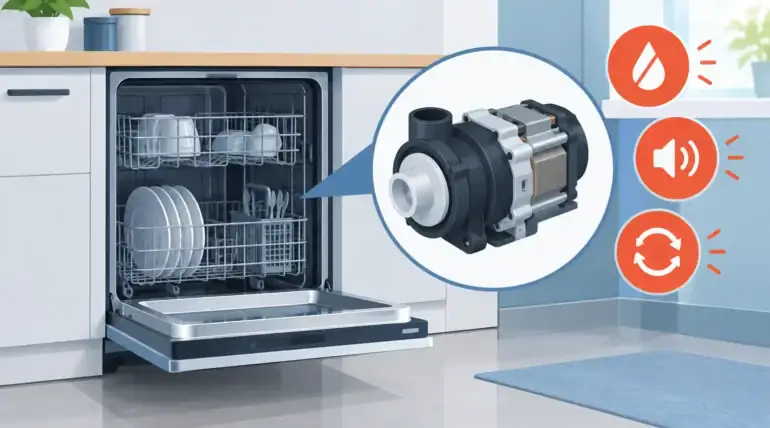
A dishwasher that finishes its cycle with a pool of dirty water in the bottom is more than an inconvenience. It can leave you rewashing dishes by hand, create unpleasant odors, and in some cases lead to a leak under the cabinet. Knowing the best signs of a dishwasher pump failing helps you act before a small drainage or circulation problem turns into a larger repair.
Your dishwasher uses pumps to move water at different points in the cycle. One pump circulates water through the spray arms for washing, while the drain pump removes dirty water at the end. A problem with either can cause noticeable changes in performance, but the symptoms are not always as simple as a dishwasher that will not drain. Here is what to watch for and when it makes sense to schedule trusted dishwasher repair.
1. Water Stays in the Bottom After a Cycle
Standing water in the tub is one of the clearest signs of a drain pump problem. After the cycle ends, a small amount of water may remain around the filter area on some models. A visible pool across the bottom of the tub, however, is not normal.
Before assuming the pump has failed, check for the more common causes: a clogged filter, food debris in the drain area, a kinked drain hose, or a blocked garbage disposal connection. If the filter is clean and the dishwasher still will not remove water, the drain pump, its wiring, or its control signal may be the issue.
Do not keep starting new cycles in hopes that the water will eventually clear. Repeated attempts can increase the chance of overflow and make it harder to identify the original problem.
2. The Dishwasher Makes a Humming or Grinding Noise
Pumps are not silent, but their normal sound is usually a steady low hum during washing or draining. A loud hum with no water movement can mean the motor is receiving power but the impeller is stuck or damaged. Grinding, rattling, or a harsh buzzing sound can point to debris caught in the pump or a worn internal component.
Small items such as broken glass, labels, bones, or bits of plastic can make their way past the filter. Sometimes removing the obstruction restores normal operation. Other times, the debris has damaged the impeller or pump housing, and replacement is the more dependable fix.
A new noise deserves attention even if the dishwasher is still completing cycles. Waiting until the pump stops altogether can leave you with standing water at the worst possible time.
3. Dishes Are Still Dirty After a Normal Cycle
If your dishwasher fills and drains but dishes come out with food residue, cloudy film, or detergent left in the dispenser, the circulation pump may not be moving water with enough force. This is different from a drain pump issue. The circulation pump sends wash water through the spray arms, so a weak or failed pump often causes poor cleaning across both racks.
First, make sure the spray arms can turn freely and their openings are not clogged. Also check that you are not blocking the spray arms with large cookware. If those basics look right and cleaning results suddenly decline, a technician can determine whether the circulation pump, motor, diverter, or another wash-system part is at fault.
4. The Dishwasher Stops Mid-Cycle or Shows an Error Code
Many newer dishwashers monitor water movement. When the control detects that the appliance cannot drain or circulate water as expected, it may pause the cycle, cancel it, or display an error code.
The exact code varies by brand and model, so the code alone does not prove the pump has failed. It may indicate a clogged hose, faulty float switch, wiring issue, control board problem, or pump malfunction. Still, a recurring drain or wash error is a strong reason to arrange service rather than repeatedly resetting the dishwasher.
Take a photo of the error code before turning the power off. That detail can help the technician narrow down the problem faster when they arrive.
5. Water Drains Very Slowly
A dishwasher does not have to stop draining completely for the drain pump to be failing. Slow draining can be an early warning sign, especially if you notice water lingering long after the cycle is over or hear the pump running longer than usual.
Slow drainage often starts with a partial blockage in the filter, hose, air gap, or disposal connection. But if those areas are clear, the pump may be losing strength. It can also happen when an impeller is worn, cracked, or partially obstructed.
This is one of the best signs of a dishwasher pump failing to address promptly because partial drainage can become a complete no-drain situation without much warning.
6. There Is a Burning Smell or Repeated Tripping
Turn the dishwasher off and stop using it if you smell burning plastic or electrical insulation, notice smoke, or find that the circuit breaker trips when the machine reaches the wash or drain portion of a cycle. A seized pump motor can overheat, and damaged wiring or electrical connections need immediate professional attention.
A breaker can trip for reasons unrelated to the dishwasher pump, so this is not a do-it-yourself diagnosis. Avoid resetting the breaker over and over. Leave the dishwasher off until a trained technician can inspect the appliance safely.
7. The Dishwasher Leaks During Draining or Washing
Not every dishwasher leak comes from the door seal. A failing pump seal, cracked pump housing, loose connection, or damaged internal hose can allow water to escape underneath the appliance. You may see water near the front corners, under the kick plate, or on the floor after a cycle.
Because water can travel along flooring or inside cabinetry before it becomes visible, even a small recurring leak matters. Place towels around the area to limit immediate damage, turn off the dishwasher, and avoid running another cycle until the source is identified.
8. The Pump Runs When It Should Not
A drain pump that keeps running after the dishwasher has emptied can indicate a stuck float, a detected leak in the base pan, a control issue, or a pump-related problem. Some dishwashers activate the drain pump as a safety response when water reaches the bottom tray.
If the pump runs continuously, cancel the cycle and turn off power at the breaker if it will not stop. Do not remove panels or tip the appliance while it is connected to electricity. A professional diagnosis can determine whether the issue is a failed pump, leak sensor condition, wiring fault, or control board failure.
When a Pump Repair Is Worth It
A dishwasher pump can often be replaced without replacing the entire appliance. Whether repair is the right choice depends on the dishwasher’s age, overall condition, repair cost, and whether other major components are also failing. A newer dishwasher with a single pump issue is often a good repair candidate. An older unit with repeated leaks, rust, and multiple electrical problems may call for a more careful cost comparison.
The right diagnosis matters because several dishwasher faults can look like pump failure. A clogged filter is a much different repair than a failed circulation motor, and a drainage issue caused by the disposal connection does not require a new pump. An experienced technician should check the full water path, electrical connections, and operation of the pump before recommending a repair.
What You Can Safely Check First
Start by turning off the dishwasher and removing the lower rack. Clean the filter according to your model’s instructions, then inspect the drain area for visible food particles or foreign objects. Check beneath the sink for a bent drain hose and confirm that the dishwasher drain connection is not blocked.
Avoid taking apart the pump assembly unless you are comfortable working with appliance components and have disconnected power. Pumps sit in a tight area beneath the tub, and improper reassembly can create leaks or damage seals. If the problem remains after basic cleaning, scheduling service is usually the fastest path back to a dependable dishwasher.
For homeowners in Cincinnati and nearby communities, Smart Appliance Repair provides clear explanations, upfront pricing, and trained service for major dishwasher brands. If your machine is holding water, making new noises, or leaving dishes dirty, acting early can protect your kitchen from a more disruptive breakdown.


