



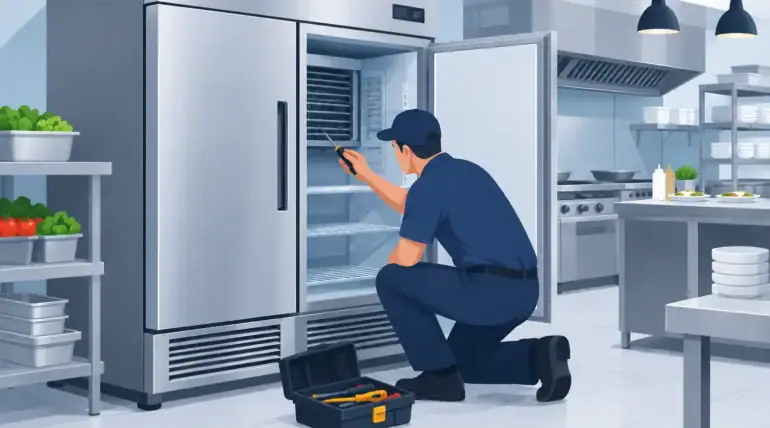
A commercial freezer can look fine from the outside while temperatures slowly creep upward, frost builds around the door, and food quality starts to suffer. This restaurant freezer maintenance guide helps kitchen managers catch those problems early, protect inventory, and avoid the disruption of an unexpected breakdown during service.
Start With Temperature Control
Most commercial freezers should hold a consistent temperature of 0°F or below. The exact target may vary slightly based on the equipment, food stored, and manufacturer instructions, but consistency matters as much as the number itself. A freezer that swings from -2°F to 8°F is not operating reliably, even if it occasionally reaches the right temperature.
Check and record the temperature at least twice a day: once before opening and once during a busy shift. Use an independent appliance thermometer inside the cabinet rather than relying only on the display panel. Built-in displays can fail, become inaccurate, or show the air temperature near the sensor instead of the temperature where food is stored.
If the temperature rises above 0°F, do not assume it will correct itself. Check that doors are fully shut, products are not blocking vents, and the unit has not been overloaded with warm deliveries. If the temperature remains elevated or alarms continue, move vulnerable food according to your food-safety procedures and schedule professional service promptly.
Keep Airflow Clear Inside and Around the Freezer
A freezer needs room to move cold air through the cabinet and release heat from its refrigeration system. Crowding products against interior vents can create warm zones, even when the thermostat is set correctly. Organize food so air can circulate around shelves and between containers.
Avoid loading a large amount of room-temperature product all at once whenever possible. Break deliveries into smaller batches, allow air space around boxes, and give the unit time to recover. A busy kitchen may need more freezer capacity rather than expecting one cabinet or walk-in to handle every delivery and every rush.
The outside of the equipment matters too. Condenser coils and ventilation areas need clearance from walls, storage boxes, grease, and dust. A blocked condenser forces the compressor to work harder, raises energy use, and can shorten the life of expensive components. Follow the manufacturer’s clearance recommendations for your specific model, especially for undercounter and reach-in units installed in tight spaces.
Do Not Use the Freezer as Storage Around the Freezer
It is common for boxes, cleaning supplies, or unused equipment to collect beside refrigeration equipment. That habit can block airflow to the condenser or prevent technicians from accessing the unit quickly during a repair. Keep the area around the freezer clean, dry, and accessible.
Clean Condenser Coils on a Regular Schedule
Dirty condenser coils are one of the most common preventable causes of commercial freezer trouble. Kitchen air carries grease, flour, dust, and lint. Over time, that buildup acts like an insulating blanket on the coils, making it harder for the unit to release heat.
For many restaurants, condenser coils should be inspected monthly and cleaned every one to three months. High-volume kitchens, especially those with fryers or heavy grease exposure nearby, may need more frequent attention. Your equipment manufacturer may specify a different schedule, so use that as the baseline.
Before cleaning, turn the unit off if the manufacturer instructions require it. Use a soft brush or vacuum designed for coils, working carefully to avoid bending the delicate fins. Do not force water, harsh chemicals, or high-pressure air into electrical components. If the coils are heavily caked with grease or difficult to reach, professional maintenance is the safer choice.
Cleaning coils is not a cure for every cooling problem. If the freezer still runs constantly, struggles to hold temperature, or makes unusual sounds after the coils are clean, it may have a fan, compressor, control, defrost, or sealed-system issue that needs diagnosis.
Inspect Door Gaskets and Hinges Every Week
A worn door gasket lets warm, humid kitchen air enter the freezer. That increases frost, makes the compressor run longer, and can lead to temperature problems. The damage may be subtle at first, such as a small tear, hardened corner, loose section, or door that no longer closes squarely.
Inspect gaskets weekly for cracks, food residue, gaps, and stiffness. Clean them with mild soap and warm water, then dry them thoroughly. Sticky spills and grease can keep the seal from sitting flat against the frame.
A simple paper test can help identify a weak seal. Close the door on a strip of paper and pull gently. If the paper slides out with almost no resistance at several points around the door, the gasket or door alignment may need attention. One weak area may be repairable, but widespread gasket wear usually calls for replacement.
Also watch for sagging doors, loose hinges, or doors that pop open after closing. Slamming a freezer door can damage hinges and seals over time. Train staff to close doors firmly without force and to report a door that does not shut easily.
Stay Ahead of Frost and Defrost Problems
Some frost is normal depending on the type of freezer and how often it is opened. Heavy frost is not. Ice on the evaporator, interior walls, door frame, or product packaging can restrict airflow and point to a failed gasket, door-use issue, or defrost-system problem.
Never chip ice with knives, screwdrivers, or other sharp tools. It is easy to puncture an evaporator coil, turning a manageable frost problem into a major repair. Do not use open flames or unsafe heating methods either.
Instead, identify the cause. Is the door being left open during prep? Are staff members placing hot product inside? Is the gasket torn? If frost returns quickly after proper cleaning and door practices, the freezer may have a malfunctioning defrost heater, sensor, timer, drain, or control board. That is a professional repair issue, not a problem to ignore until the unit stops cooling.
Maintain Clean Drains, Floors, and Cabinet Surfaces
Drain lines and drain pans can become clogged with food debris, slime, or ice. A blocked drain may cause water pooling, ice buildup, leaks, odors, or damage to flooring. Include drain inspection in your routine cleaning plan, following the equipment manufacturer’s instructions.
Keep the floor beneath and around the freezer clean and dry. Standing water can create slip hazards and may signal a drain problem, condensation issue, or failing door seal. It can also attract pests and make it harder to spot a leak before it becomes serious.
Inside the cabinet, wipe spills quickly and remove damaged packaging. Clean shelves and walls with food-safe products that will not harm interior surfaces or leave strong odors around stored food. Good sanitation supports food safety, but it also helps staff notice changes such as unusual frost, rust, cracking, or water droplets.
Know the Warning Signs That Need Fast Service
Restaurant teams are often tempted to wait until a freezer completely stops working. That decision can turn a repairable issue into inventory loss, an emergency service call, and a disrupted shift. Call for service when you notice repeated temperature alarms, a compressor that runs almost nonstop, unusual buzzing or grinding, frequent breaker trips, water leaks, or excessive frost.
Other warning signs include a burning smell, a hot exterior where it was not hot before, a door that will not seal, or food that feels softer than normal. A freezer can appear to be running while failing to hold safe temperatures, so temperature logs should guide your decision more than the sound of the motor alone.
For a restaurant, the right response depends on the problem. A single door left ajar may be corrected quickly. A unit that cannot recover temperature after the door is closed should be treated as urgent. Move products to a working freezer when safe procedures allow, document temperatures, and get trained help before the situation worsens.
Build a Maintenance Routine Your Team Will Actually Follow
The best maintenance plan is simple enough to survive a Friday dinner rush. Assign daily temperature checks and visual door inspections to opening or closing staff. Schedule weekly gasket and interior cleaning, monthly airflow and coil inspections, and periodic professional maintenance based on equipment age, usage, and manufacturer guidance.
Keep a log near the unit or in your digital operations system. Record temperatures, coil cleanings, frost observations, repairs, and recurring concerns. Those notes help identify patterns and give a technician useful information if the freezer develops an intermittent problem.
Smart Appliance Repair provides commercial freezer service for restaurants that need clear answers, upfront communication, and fast help when cooling equipment is at risk. A small concern addressed early is usually easier to manage than a freezer failure in the middle of a packed service.
Your freezer works hardest when your kitchen is busiest. Give it regular attention, take temperature changes seriously, and call for help before a minor warning becomes a costly interruption.