



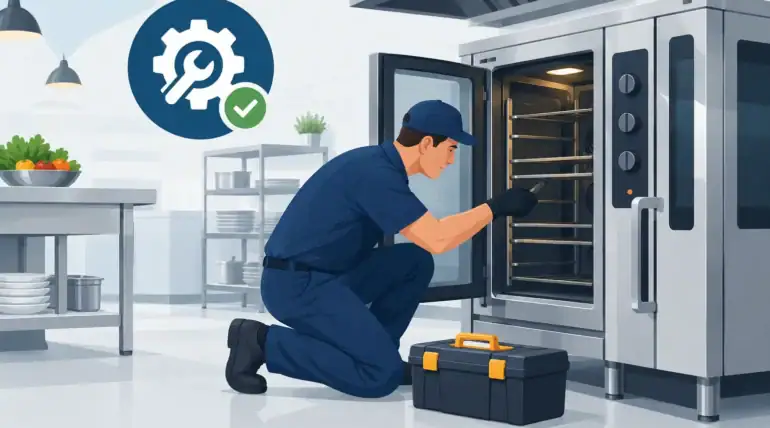
A dinner rush can expose a small oven problem fast. A door that does not seal, a burner that heats unevenly, or a control that drifts out of temperature can slow ticket times, affect food quality, and create a stressful service. Consistent restaurant oven maintenance gives managers a better chance of catching those issues before they shut down part of the kitchen.
For most restaurants, the goal is not to make staff into repair technicians. It is to build simple daily habits, recognize warning signs early, and know when to schedule trained commercial appliance service. That approach protects the equipment, supports safer operation, and helps avoid the higher cost of an emergency breakdown.
Why Restaurant Oven Maintenance Matters
An oven works hard in a commercial kitchen. High temperatures, repeated door openings, grease vapor, spills, and long operating hours all put pressure on heating components, gaskets, fans, igniters, thermostats, and controls. Even a well-built unit will lose performance when routine cleaning and inspections are delayed.
The first cost of poor maintenance is often inconsistency. One rack may brown faster than another, a pizza may take longer than usual, or baked items may come out underdone despite following the same recipe. Those problems can lead to waste, unhappy guests, and staff trying to compensate by changing cook times or temperatures. That workaround may keep service moving for a day, but it can also hide a problem that is getting worse.
The bigger risk is downtime. If an oven fails before a weekend rush, the business may have to change the menu, limit orders, or send customers elsewhere. A regular maintenance plan cannot prevent every failure, but it can reduce avoidable breakdowns and make repair needs easier to spot.
Start With Daily Cleaning and Visual Checks
The most useful maintenance work happens after service, when staff can clean the oven safely and look for obvious changes. Always allow equipment to cool as needed and follow the manufacturer’s cleaning instructions. Harsh chemicals, steel wool, or excessive water can damage surfaces, gaskets, sensors, and electrical components.
Wipe up spills promptly, especially sugar, sauces, fats, and acidic foods. Baked-on residue can smoke, create odors, interfere with heat circulation, and eventually damage interior surfaces. Clean crumbs and debris from the oven cavity, racks, door area, and any accessible drip trays. If the model has a fan cover or air intake that staff can safely clean, keep it clear of grease and dust.
During this routine, ask employees to look for a few changes: a torn or flattened door gasket, loose rack guides, cracked glass, unusual discoloration, standing water, damaged knobs, or a door that no longer closes squarely. These are not details to ignore. A worn gasket alone can let heat escape, forcing the oven to run longer and making temperature recovery slower during busy periods.
Do not spray cleaner directly onto control panels, vents, or electrical connections. Use a cloth and the approved product instead. A clean oven is easier to inspect, but cleaning must never create another repair problem.
Check Temperature Accuracy Before It Affects Food
An oven display is not always the same as the actual cavity temperature. Over time, sensors and thermostats can drift, and hot or cold spots may develop. If the oven is cooking differently than it did last month, verify its performance instead of assuming the recipe is the issue.
Use a reliable oven thermometer or temperature probe rated for commercial use. Let the oven fully preheat, place the thermometer where food is normally cooked, and compare the reading with the set temperature. Repeat the check at more than one temperature if possible. For convection ovens, test different rack positions because airflow matters.
A small difference may be normal depending on the unit and the point in its heating cycle. A repeated or significant difference deserves attention, particularly when it affects cooking results. Avoid adjusting internal calibration settings unless the manufacturer specifically allows it and a qualified person is handling the work. Improper calibration can make food consistency worse and complicate diagnosis later.
Watch for uneven cooking patterns
Uneven browning is one of the clearest signs that an oven needs closer attention. It may point to a failing heating element, weak igniter, airflow restriction, fan problem, damaged gasket, or temperature control issue. In gas equipment, a burner flame that looks weak, irregular, or yellow rather than predominantly blue can also signal a service need.
Keep a short note of the symptom, the temperature setting, and when it occurs. Clear details help a technician diagnose the issue faster and help your team avoid repeating the same troubleshooting steps during a rush.
Protect Doors, Seals, Fans, and Ventilation
Oven doors take constant abuse in a fast kitchen. Slamming them, hanging towels on handles, or leaving them open longer than necessary wears down hinges and seals. Train staff to close doors firmly but gently and to report doors that sag, bounce open, or require force to latch.
The door gasket should be clean, flexible, and fully attached. Grease buildup can shorten its life, while tears and gaps allow heat loss. If you can feel excessive heat escaping around the door during normal operation, do not wait for the gasket to fail completely. Replacing a worn seal is typically far easier than dealing with poor performance and overworked heating components.
Convection and combination ovens also depend on proper airflow. Fans, vents, and filters must stay clean enough for heat to circulate. A blocked air path can cause uneven cooking, longer recovery times, overheating, and strain on internal parts. The exact cleaning schedule depends on the oven type, how heavily it is used, and what you cook in it. Fry-heavy menus and high-volume baking often require more frequent attention than light-duty use.
Build a Schedule Staff Can Actually Follow
A maintenance schedule only works if it is realistic. Instead of a long checklist that no one has time to complete, assign simple tasks by frequency and designate who records them. A manager should review the log regularly, especially after equipment concerns or changes in food quality.
Daily work generally includes cleaning spills, checking the door and gasket, clearing accessible debris, and listening for unusual sounds. Weekly checks can include a closer inspection of racks, hinges, knobs, fan areas, and exterior vents. Monthly checks are a good time to test temperature accuracy, look for loose hardware, and review whether the oven is taking longer to preheat or recover.
For heavily used equipment, schedule professional preventive service on a planned basis. The right interval depends on the oven model, age, usage level, and manufacturer recommendations. A restaurant running an oven continuously may benefit from more frequent service than a small operation that uses it for limited prep. A trained technician can inspect electrical connections, gas components where applicable, heating systems, controls, fans, safety devices, and wear items that are not appropriate for staff to service.
Know When to Call for Professional Oven Repair
Some issues require a fast service call, not another cleaning cycle or a staff workaround. Stop using the oven and arrange qualified help if you notice a gas smell, repeated breaker trips, sparking, smoke that is not related to food residue, a damaged power cord, or an oven that will not shut off properly. Follow your facility’s safety procedures immediately if there is a suspected gas or electrical hazard.
Other warning signs may not be emergencies, but they should still be addressed soon: slow preheating, temperatures that fluctuate, burners that fail to ignite consistently, loud fan noise, error codes, a nonresponsive control panel, or food cooking unevenly across the same rack. Waiting can turn a manageable repair into a full service interruption.
Smart Appliance Repair provides commercial oven service for restaurants that need clear answers and dependable scheduling. A qualified technician can identify the cause, explain the recommended repair, and help you make an informed decision before work begins.
Keep Maintenance Connected to Your Kitchen Operations
The best time to schedule planned service is not after the oven has already disrupted a shift. Review your slow periods, seasonal traffic, and menu demands. If the oven is central to your highest-volume items, consider how you would operate during a repair and plan service when the impact is lower.
It also helps to keep basic records: installation date, model information, prior repairs, temperature checks, and recurring symptoms. This information gives your repair provider a clearer picture of the unit and can help identify whether a part is wearing out repeatedly or whether a larger replacement decision may eventually make more financial sense.
A well-maintained oven does more than stay cleaner. It gives your kitchen a more reliable foundation for every shift, so your staff can focus on serving guests instead of working around equipment problems.