



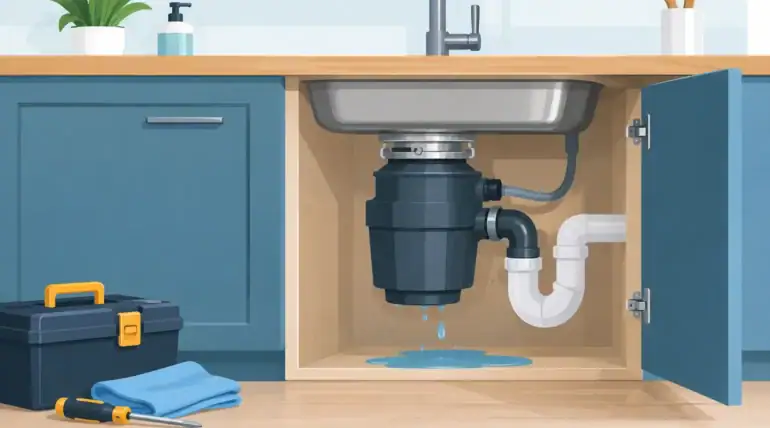
A puddle under the sink can turn a normal cleanup into a frustrating problem fast. If you are wondering why garbage disposal leaks, the answer usually depends on exactly where the water appears. A loose connection may be a straightforward fix, while water coming from the bottom of the unit can signal that the disposal itself has failed.
The good news is that the location of the leak often points directly to the cause. Start by keeping the disposal off, drying the area beneath the sink, and checking for fresh water while the faucet runs. If there is any uncertainty about the source or an electrical connection is wet, stop using the unit and schedule service.
Why Garbage Disposal Leaks From Different Areas
A garbage disposal connects to the sink, drainpipe, dishwasher line, and power supply in a tight cabinet space. Water can escape at any of these points, then run along the housing or plumbing and make the true source difficult to spot.
Before inspecting anything, turn off power at the circuit breaker. Do not rely only on the wall switch. Never put your hand inside the disposal, even if it is not running.
Leaking from the top or sink flange
Water around the top rim of the disposal commonly comes from the sink flange. This is the metal ring where the disposal mounts to the drain opening. Over time, the plumber’s putty or sealing material beneath that flange can dry out, crack, or lose its seal.
You may see water dripping down the outside of the disposal shortly after filling the sink. A loose mounting assembly can also allow movement at the flange and create a leak. The disposal may still grind normally, but the cabinet floor can suffer water damage if the issue is ignored.
This repair generally requires removing or lowering the disposal, resealing the flange correctly, and reinstalling the unit securely. Because disposals are heavy and the work happens near wiring and plumbing, many homeowners prefer to have a trained technician handle it.
Leaking from the dishwasher connection
If your dishwasher drains through the garbage disposal, inspect the small hose connection on the side of the unit. A worn hose clamp, split drain hose, or loose connection can leak when the dishwasher empties.
This type of leak may not show up while the kitchen faucet is running. Instead, it often appears after a dishwasher cycle or during its drain phase. Watch for moisture around the hose connection, but do not run the dishwasher if water is reaching an outlet, cord, or electrical box.
Sometimes the connection is secure, but a blockage inside the disposal causes water to back up and force its way out. Food buildup, grease, or a partial clog farther down the drain line can all contribute.
Leaking from the drainpipe connection
The drainpipe at the bottom or side outlet of the disposal is another common trouble spot. Its gasket, screws, or pipe fittings can loosen with normal vibration. A cracked pipe, misaligned trap, or deteriorated gasket can also let water escape every time the sink drains.
Check whether the leak happens only when the sink is full and released. That pattern often points to a drain connection rather than the sink flange. If the disposal was recently replaced, moved, or serviced, the drainpipe may need to be realigned and resealed.
Avoid overtightening screws or fittings in an attempt to stop the drip. Excess force can crack a plastic drain component or damage a gasket, creating a larger repair.
Water leaking from the bottom of the disposal
Water coming from the bottom of the garbage disposal is usually the most serious sign. The internal seals that protect the motor and grinding chamber can wear out over time. Once they fail, water can leak through the disposal housing itself.
Unlike a loose hose clamp, internal seal failure is not usually a dependable repair. Manufacturers generally do not design household disposals for internal rebuilding in the field. Replacement is often the practical option, especially if the unit is older, noisy, jams frequently, or has begun tripping the reset button.
A technician can confirm whether the water is truly coming from the disposal body and make sure the replacement unit is properly matched to your sink, drain configuration, and dishwasher connection.
What Causes a Garbage Disposal to Leak Over Time?
Garbage disposals work in a wet, demanding environment. Even a quality unit eventually experiences wear. Daily vibration can loosen fittings, while repeated exposure to food debris, detergents, and hot water can degrade seals and gaskets.
Grease is especially hard on kitchen drainage systems. It may go down as a liquid, then cool and cling to the disposal and drainpipe. That buildup restricts flow, increases pressure during draining, and can expose weaknesses at a connection. Fibrous foods, coffee grounds, bones, and large amounts of starchy food can also contribute to clogs or jams. For most households, running cold water before, during, and for several seconds after using the disposal helps move ground food through the line.
Age matters too. A disposal that has worked reliably for many years may reach a point where a new seal, mounting repair, and drain adjustment no longer make financial sense. The right choice depends on the source of the leak, the unit’s condition, and whether other problems are present.
What to Do When You Find a Leak
First, clear the cabinet and dry everything under the sink. Place a towel or shallow pan beneath the disposal to protect the cabinet floor temporarily. Then avoid running the disposal until you know where the leak is coming from.
If you can safely identify a loose drainpipe screw or hose clamp, a small adjustment may stop the leak. But do not attempt to disassemble the disposal while it is connected to power, and do not use tape, caulk, or sealant as a permanent fix for a cracked housing or failed internal seal.
A leaking disposal can damage more than the appliance. Moisture can swell cabinet materials, stain flooring, encourage mold growth, and create an electrical hazard under the sink. Fast attention is especially worthwhile if the leak is near the disposal cord, an outlet, or a dishwasher connection.
When to Call for Garbage Disposal Repair
Professional service is a smart next step when the source is unclear, the leak returns after tightening a connection, or water is coming from the disposal housing. It is also time to call when the unit hums but does not grind, trips the breaker, drains slowly, smells persistently bad, or has visible corrosion.
For a restaurant, rental property, or busy household, a leaking disposal can disrupt kitchen operations quickly. A trained repair technician can inspect the full system instead of treating only the visible drip. That means checking the mounting flange, drain fittings, dishwasher line, electrical connection, and condition of the disposal itself before recommending repair or replacement.
Smart Appliance Repair provides prompt, honest garbage disposal service for homeowners and businesses that need clear answers and dependable work. You should know what is wrong, what it will take to fix it, and whether replacement is the better value before work begins.
A small drip rarely stays small under a sink. Turn off power, protect the cabinet, and have the source checked before water damage or an unexpected disposal failure makes a simple kitchen repair more expensive.