



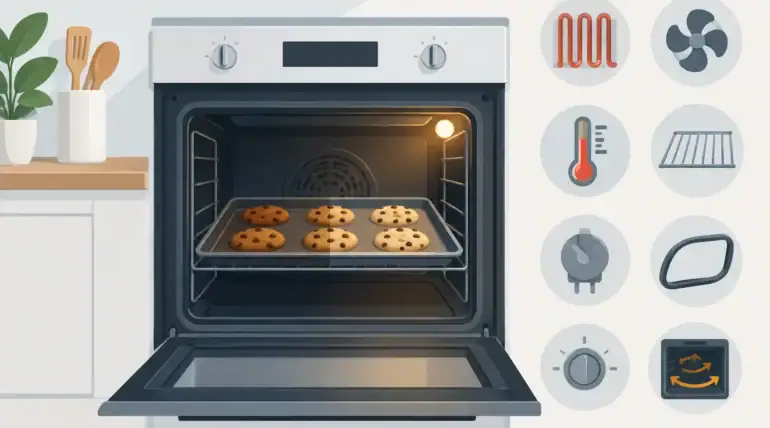
A casserole that is bubbling on one side but cold in the center is more than frustrating when dinner is waiting. If you are asking, “why is my oven unevenly cooking,” the problem may be as simple as rack placement or as technical as a failing heating element, temperature sensor, or control board. The good news is that uneven cooking is usually a diagnosable oven repair issue, not something you have to work around forever.
Why Is My Oven Unevenly Cooking?
An oven cooks evenly only when it can reach the selected temperature, maintain that temperature, and circulate heat consistently around the food. A problem in any of those areas can leave you with scorched cookies, undercooked roasts, or dishes that need constant turning.
Before assuming the oven needs a major repair, look at the food itself. Overcrowded racks, dark cookware, oversized baking sheets, and opening the door repeatedly can all affect results. But if the same side of the oven always burns food, the oven runs noticeably hot or cool, or one rack cooks far differently than another, a mechanical issue is more likely.
1. The Oven Temperature Is Not Accurate
A temperature setting is a target, not a guarantee. Most ovens cycle above and below the selected temperature as they heat, but the average temperature should stay reasonably close to the setting. When the oven is consistently 25 degrees or more too hot or too cool, food can bake unevenly or finish at unpredictable times.
An inexpensive oven thermometer can help confirm whether there is a temperature problem. Place it in the center of the middle rack, preheat fully, and allow the oven to cycle for 20 to 30 minutes. Check the reading several times rather than relying on the first number you see.
Some ovens allow temperature calibration through the control panel. This can be useful when the difference is small and consistent. If temperatures swing widely, however, calibration will not fix a faulty sensor, heating element, or electronic control.
2. A Heating Element Is Failing
Electric ovens commonly use a bake element near the bottom and a broil element at the top. During baking, many models use both elements at different points in the cycle. If one element is weak, damaged, or not receiving power, the oven may heat slowly and cook heavily from one direction.
Look for visible warning signs after the oven is completely cool: blistering, cracks, burnt spots, or areas that appear warped. An element can also fail without visible damage. For example, the oven may reach a moderate temperature but struggle to maintain it once food is inside.
Do not touch, remove, or test an element unless you are comfortable safely disconnecting power and working with electrical components. A trained technician can test the element and its connections accurately, then replace the failed part if needed.
3. The Convection Fan Is Not Circulating Air
A convection oven relies on a fan to move hot air around the cavity. This helps food cook more consistently, especially when using multiple racks. If the fan is not running, runs intermittently, or makes grinding or rattling sounds, heat can collect in certain areas instead of circulating evenly.
With the oven set to convection, listen for the fan after preheating begins. Depending on the model, it may cycle on and off rather than run nonstop. A fan that never operates, sounds unusually loud, or leaves one side of every pan undercooked deserves professional attention.
Keep in mind that convection settings often cook food faster than conventional bake settings. Recipes may need a slightly lower temperature or shorter cooking time. That adjustment is normal and does not necessarily mean the oven is malfunctioning.
4. The Oven Sensor Is Giving Bad Readings
The oven temperature sensor tells the control system when to turn heat on and off. If that sensor is inaccurate, the oven may believe it is at 350 degrees when it is actually much hotter or cooler. This can cause erratic cooking results, long preheat times, or food that burns on the outside before the center is done.
The sensor is usually a slim metal probe located inside the back wall of the oven. It should not touch the wall or be coated with heavy residue. A bent, loose, or damaged sensor may need replacement. Because accurate diagnosis can also involve wiring and the control board, this is typically a repair best handled by a qualified appliance technician.
5. The Door Is Not Sealing Properly
An oven door gasket keeps heat inside the cavity. When the gasket is torn, flattened, loose, or coated with baked-on debris, heat can escape around the door. The oven may take longer to preheat and create uneven temperatures near the front or sides of the cavity.
Inspect the gasket when the oven is cool. It should sit securely around the door opening without obvious gaps or tears. Clean light residue gently with a damp cloth, but avoid pulling aggressively on the gasket. If it is damaged or will not stay in place, replacement is usually the right fix.
A door that hangs crooked or does not close firmly may point to worn hinges or a damaged latch. That problem affects both cooking performance and safety, particularly when the outside of the door becomes unusually hot.
6. Rack Position and Cookware Are Working Against You
Not every uneven result is a failed oven part. Food placed too close to the lower element can brown or burn on the bottom. Food too close to the top can brown before the middle is finished. For most baking, the center rack gives the most balanced heat exposure.
Pans matter, too. Dark metal and glass bakeware absorb heat more aggressively than light-colored aluminum pans. A dark pan can produce crisp or overdone edges even when the oven is operating normally. Large sheets that nearly touch the oven walls can also restrict air circulation.
If you are baking on two racks, leave space between pans and avoid placing one directly above another. Rotate pans halfway through only when the recipe allows it. Opening the oven repeatedly releases heat, so use the door window and interior light whenever possible.
7. The Oven Needs a Thorough Cleaning
Heavy grease, spilled food, and burnt residue can interfere with airflow and create hot spots. Debris on the oven floor can also smoke, produce odors, and make it harder to tell whether food is actually burning.
Clean the oven according to the manufacturer’s instructions, especially before using a self-clean cycle. Self-cleaning uses extremely high heat and can place stress on older components. If your oven already has heating problems, error codes, a damaged gasket, or a fan issue, it is wise to have it inspected before running that cycle.
Avoid lining the oven floor or racks with aluminum foil unless your manufacturer specifically permits it. Foil can block vents, reflect heat in the wrong direction, and contribute to poor cooking results.
8. The Electronic Control Board Has a Problem
Modern ovens depend on an electronic control board to manage heating cycles, sensors, timers, and display settings. When the board begins to fail, the oven may heat inconsistently, ignore temperature changes, show error codes, or work normally one day and poorly the next.
Control-board symptoms can resemble a bad element or sensor, which is why guessing can become expensive. Replacing parts without testing may not solve the actual problem. A technician can check the heating system, sensor resistance, wiring, and board output to identify the source before recommending a repair.
When to Call for Oven Repair
A few cooking adjustments may solve minor hot spots, but certain signs call for prompt service. Schedule repair if the oven will not preheat, trips a breaker, smells like burning wires, displays an error code, has a cracked element, or repeatedly leaves food raw in one area and burnt in another.
For households that depend on the oven every day, a quick diagnosis can prevent wasted groceries and the hassle of unreliable meals. Smart Appliance Repair provides straightforward oven repair for major brands, with trained technicians who explain the issue, discuss pricing upfront, and work to restore dependable performance.
An oven does not have to be perfect to bake well, but it should be predictable. Once the source of uneven heat is corrected, you can get back to cooking without guessing which side of the pan will finish first.