



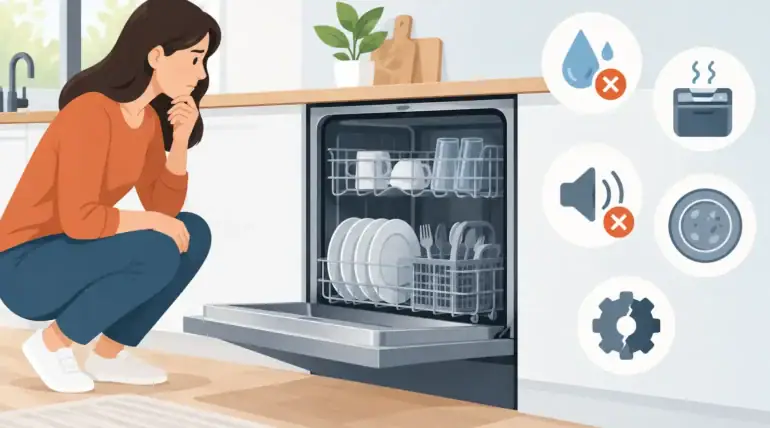
A dishwasher that finishes a cycle with dirty dishes, standing water, or a new puddle on the floor is more than an inconvenience. It can interrupt a busy household, waste water, and lead to bigger damage if the problem is ignored. Knowing the best signs dishwasher needs repair helps you act early, protect your kitchen, and avoid the frustration of washing every dish by hand.
Some dishwasher problems have simple causes, such as a clogged filter or a detergent issue. Others point to a failed pump, worn door seal, heating problem, or electrical fault that needs a trained technician. Here are the symptoms worth taking seriously.
The Best Signs Your Dishwasher Needs Repair
1. Your dishes come out dirty or gritty
If plates, glasses, and silverware consistently come out with food particles, cloudy residue, or a gritty film, start by checking the basics. Make sure the spray arms can spin freely, the filter is clean, and dishes are not blocking the detergent dispenser.
If those checks do not solve the issue, the dishwasher may have weak water pressure, a clogged spray arm, a circulation pump problem, or a failing water inlet valve. Hard-water buildup can also affect cleaning performance. A dishwasher should save time, not create a second round of washing at the sink.
2. Water is left in the bottom after a cycle
A small amount of water around the filter area can be normal. A noticeable pool of dirty water in the bottom of the tub is not. Standing water usually means the dishwasher is not draining properly.
Sometimes the cause is a removable food blockage in the filter or drain area. It can also be a kinked drain hose or a clogged connection at the garbage disposal. When the problem keeps returning, a failed drain pump, damaged hose, or electrical issue may be involved. Do not keep running cycles with standing water, especially if it begins to smell unpleasant or back up into the sink.
3. You see water leaking onto the floor
A dishwasher leak deserves quick attention. Even a small leak can damage flooring, cabinets, and the subfloor beneath your kitchen. If you see water near the door, check whether the dishwasher is overloaded or whether an item is preventing the door from closing fully.
Leaks may come from a worn door gasket, loose connection, cracked hose, faulty inlet valve, or damaged pump seal. The location of the water can offer a clue, but it does not always identify the source. Turn off the dishwasher and avoid using it until the leak is inspected, particularly if water is reaching an outlet or nearby wiring.
4. The dishwasher makes loud or unusual noises
Dishwashers make normal operating sounds, including water moving, spray arms turning, and brief draining noises. What is not normal is a new grinding, loud buzzing, banging, squealing, or repeated knocking sound.
A utensil may have fallen through the rack and be striking a spray arm, so check for that first. If the noise continues with nothing loose inside, the circulation motor, drain pump, wash impeller, or another internal component could be wearing out. Catching mechanical issues early can sometimes prevent a more expensive failure later.
5. The door will not latch or stay closed
A dishwasher cannot run safely if its door does not latch correctly. You may notice that the cycle will not start, stops unexpectedly, or starts only when you press against the door. These are common signs of a worn latch, misaligned door, broken strike, or failing door switch.
Avoid forcing the door shut. A forced latch can damage the assembly further and may create a leak risk. A repair technician can determine whether the problem is a simple adjustment or whether the latch components need replacement.
6. The dishwasher will not start or loses power
When a dishwasher will not turn on, first confirm that the control lock is not activated and that the circuit breaker has not tripped. If it has power but still will not respond, the issue may involve the door switch, control panel, wiring, timer, or electronic control board.
A dishwasher that starts but shuts off before the cycle is complete also needs attention. Intermittent operation is not something to ignore, since moisture and electricity are a poor combination. If you smell burning, see sparks, or notice a hot electrical odor, stop using the appliance immediately and arrange professional service.
7. Your dishwasher is not drying dishes
Plastic containers may retain some water after a cycle, but most dishes should come out warm and reasonably dry when the dishwasher is working properly. If everything is cold, wet, or covered in moisture, the heating system may not be doing its job.
Before assuming a repair is needed, check that rinse aid is filled and that you are using a heated dry setting if your model offers one. If drying performance suddenly changes, the heating element, thermostat, vent, fan, or control system may be at fault. This is especially common when the dishwasher also leaves food residue behind, since many cycles rely on hot water to clean effectively.
8. The dishwasher has a bad smell that will not go away
A mild odor after a heavy load can often be fixed by cleaning the filter and wiping around the door gasket. A persistent sewer-like, sour, or burning smell is different. It may signal trapped debris, poor drainage, a drain hose issue, or an electrical problem.
Do not mask recurring odors with dishwasher cleaner alone. If the smell returns quickly after cleaning, there is likely an underlying cause. A professional inspection can identify whether the issue is inside the machine or connected to the kitchen drain setup.
9. You notice rust, cracks, or damaged racks
Peeling rack coating, cracked components, rust spots, and broken rack wheels may seem cosmetic, but they can affect how well the dishwasher works. Exposed rack metal can rust and leave marks on dishes. A damaged rack can prevent spray arms from turning or keep the door from closing smoothly.
Some parts are inexpensive to replace, while others may indicate broader wear. The age and overall condition of the dishwasher matter here. A technician can help you decide whether replacing a rack, seal, or small part is the sensible fix or whether the appliance is nearing the point where replacement makes more financial sense.
10. Your utility bills are rising without a clear reason
A dishwasher that runs longer than normal, repeatedly fills with water, fails to heat correctly, or needs multiple cycles to clean dishes can use more water and energy than it should. The increase may be subtle, but it adds up over time.
This sign is easiest to miss because the dishwasher may still appear to work. If you have noticed poorer results, longer cycles, or a rise in water or electric costs at the same time, scheduling a diagnosis is a practical next step.
When to Troubleshoot and When to Call for Dishwasher Repair
A quick check can solve some dishwasher complaints. Clean the filter, inspect the spray arms for debris, confirm that the water supply is on, and make sure the dishwasher is loaded according to the manufacturer’s guidance. Use fresh detergent and avoid overcrowding, which can block water from reaching every dish.
Call for repair when the dishwasher leaks, will not drain, will not start, produces electrical smells, makes harsh mechanical noises, or repeatedly performs poorly after basic cleaning. These problems often involve components that are difficult to access safely and can worsen with continued use.
For restaurants, offices, and other businesses, timing matters even more. A commercial dishwasher that cannot keep up with demand can slow service, increase labor, and create sanitation concerns. Fast diagnosis and honest recommendations help minimize downtime without guessing at the cause.
Is Repair Worth It?
In many cases, yes. A dishwasher with a failed pump, latch, valve, heating part, or door seal can often be repaired for less than the cost and disruption of replacement. The decision depends on the appliance’s age, brand, condition, repair cost, and whether it has had repeated major failures.
An upfront diagnosis gives you the information to make that decision with confidence. Smart Appliance Repair provides clear explanations, transparent pricing, and trained service for major dishwasher brands, so you know what is wrong before work begins.
If your dishwasher is leaving puddles, dirty dishes, or standing water behind, do not wait for a small issue to become kitchen damage. A timely repair can get your routine back on track and help your dishwasher do the job it was built to do.